
Gilbert and the surrounding East Valley see some of the most extreme dry heat in the country, with summer temperatures regularly climbing past a hundred and ten degrees and pavement temperatures reaching even higher. While most drivers think about this heat in terms of their own comfort, it is quietly working against a specific category of components on every vehicle in the area, the rubber parts that keep an engine running and a car gripping the road. Understanding why Arizona’s particular kind of heat is so hard on rubber, and what to check each summer, can help Gilbert drivers avoid a preventable breakdown.
Why Dry Desert Heat Attacks Rubber Differently Than Humid Heat
Rubber compounds rely on plasticizers, chemical additives that keep the material flexible rather than brittle. In a humid climate, moisture in the air helps slow the rate at which these plasticizers evaporate out of rubber components over time. Gilbert’s extremely dry heat offers no such buffer, and the combination of intense temperatures with essentially no ambient moisture accelerates plasticizer loss considerably faster than the same rubber component would experience in a more humid part of the country.
This means belts, hoses, and tires here tend to show dry cracking and brittleness sooner than manufacturer estimates based on more moderate or humid climates would suggest. The rubber essentially dries out from the inside, losing the flexibility it needs to function safely and effectively, well before it reaches the mileage or age typically associated with replacement in a less extreme environment.
How This Affects Belts Specifically
Drive belts and serpentine belts rely on flexibility to move smoothly around pulleys without cracking or slipping. Arizona’s dry heat causes these belts to lose flexibility faster, often developing small surface cracks that are not always obvious during a quick glance but which indicate the rubber has already begun to dry out significantly. A belt in this condition is more likely to slip, squeal, or fail outright, sometimes without much additional warning once the cracking has progressed far enough.
Because engine bay temperatures climb even higher than ambient air temperature during Gilbert summers, belts face a compounded heat exposure that accelerates this drying process beyond what outside temperatures alone would suggest, making regular visual inspection more important here than in a milder climate.
Why Hoses Face A Similar But More Serious Risk
Coolant hoses and other rubber hoses under the hood face the same dry heat degradation as belts, but the consequences of a hose failure tend to be more serious, since a burst coolant hose can lead to rapid overheating within just a few minutes of driving. Hoses that have become brittle from years of Arizona heat exposure may show soft spots, cracking, or bulging, any of which suggest the hose is approaching failure and should be replaced proactively rather than waiting for it to burst during a summer drive.
If your vehicle has ever overheated or shown starting trouble that seemed heat related, our guide on the top 10 reasons your car won’t start and how to get back on the road covers a range of causes, several of which can be connected to the kind of heat accelerated component wear common throughout the East Valley.
Tires Face Both Dry Rot And Heat Related Pressure Changes
Tire rubber is subject to the same dry cracking process as belts and hoses, sometimes called dry rot, which shows up as small cracks in the sidewall that indicate the rubber has lost much of its original flexibility. This is particularly relevant for tires that spend extended time parked in direct sun, since surface temperatures on Gilbert pavement can push tire temperatures well beyond what the tire experiences simply from driving.
Dry rot is especially deceptive because it can develop on a tire with plenty of remaining tread depth, leading drivers to assume the tire is still perfectly safe simply because it has not worn down. A tire’s rubber compound can become dangerously brittle years before the tread pattern would normally suggest replacement, which is exactly why a visual inspection of the sidewall matters just as much as checking tread depth for anyone driving on tires that have spent multiple summers in this climate.
Beyond dry rot, Gilbert’s heat also causes meaningful pressure swings within a single day, as air inside a tire expands significantly once both ambient temperature and heat generated from friction with hot pavement combine during a summer afternoon drive. Checking tire pressure in the morning, before temperatures climb, gives a more accurate baseline than checking during peak afternoon heat, and helps you catch both dry rot and improper inflation before either becomes a safety concern.
What To Inspect Each Summer
Before the hottest months fully arrive, it is worth visually inspecting belts for cracking or glazing, checking hoses for softness or bulging, and examining tire sidewalls for small cracks that indicate dry rot beginning to develop. Confirming tire pressure matches manufacturer specifications, and checking that tire age is not approaching the point where rubber degradation becomes a safety concern regardless of remaining tread depth, rounds out a reasonable pre summer check for Gilbert drivers.
Weatherstripping around doors and windows is worth a look as well, even though it rarely gets the same attention as belts and hoses under the hood. Dry, cracked weatherstripping can allow dust and heat into the cabin more easily, and in a climate as dusty and hot as the East Valley, a seal that has lost its flexibility makes both problems noticeably worse. Replacing a worn seal is a relatively minor repair compared to the discomfort and dust exposure that comes from ignoring it through another full summer.
Why A Mobile Mechanic Understands Gilbert’s Specific Climate
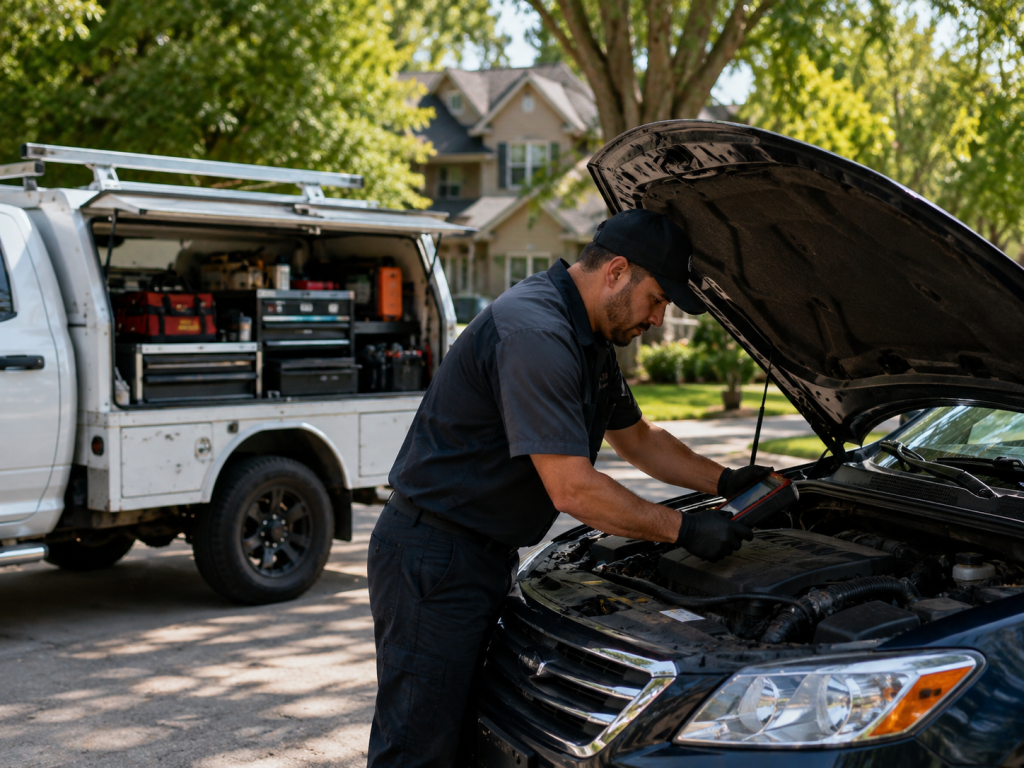
A technician who regularly services vehicles throughout the East Valley understands how Arizona’s dry heat specifically accelerates rubber degradation in a way that a generic maintenance checklist simply does not capture. Rather than waiting for a belt to squeal or a hose to fail, a mobile mechanic familiar with this climate can inspect these components proactively, catching early signs of dry heat damage before they turn into a roadside breakdown during the hottest part of the year.
We covered the broader advantages of choosing mobile service in our article on why mobile mechanics are better than traditional auto shops in Gilbert, which explains how convenience and local climate familiarity come together, particularly useful for catching the kind of heat related wear that Arizona summers reliably cause.
Stay Ahead Of What Arizona Heat Does To Rubber
Gilbert’s extreme dry heat is not going anywhere, and neither is its effect on belts, hoses, and tires. Drivers who inspect these components proactively each summer, rather than waiting for an obvious failure, are far less likely to end up stranded on a sun baked roadside during the hottest stretch of the year.
If it has been a while since your belts, hoses, or tires were checked, visit our homepage to learn more about our services, or reach out through our contact us page to schedule a visit at your home or office anywhere in the Gilbert area.
A little proactive attention now can help your car’s rubber components hold up against everything another Arizona summer is about to bring.