
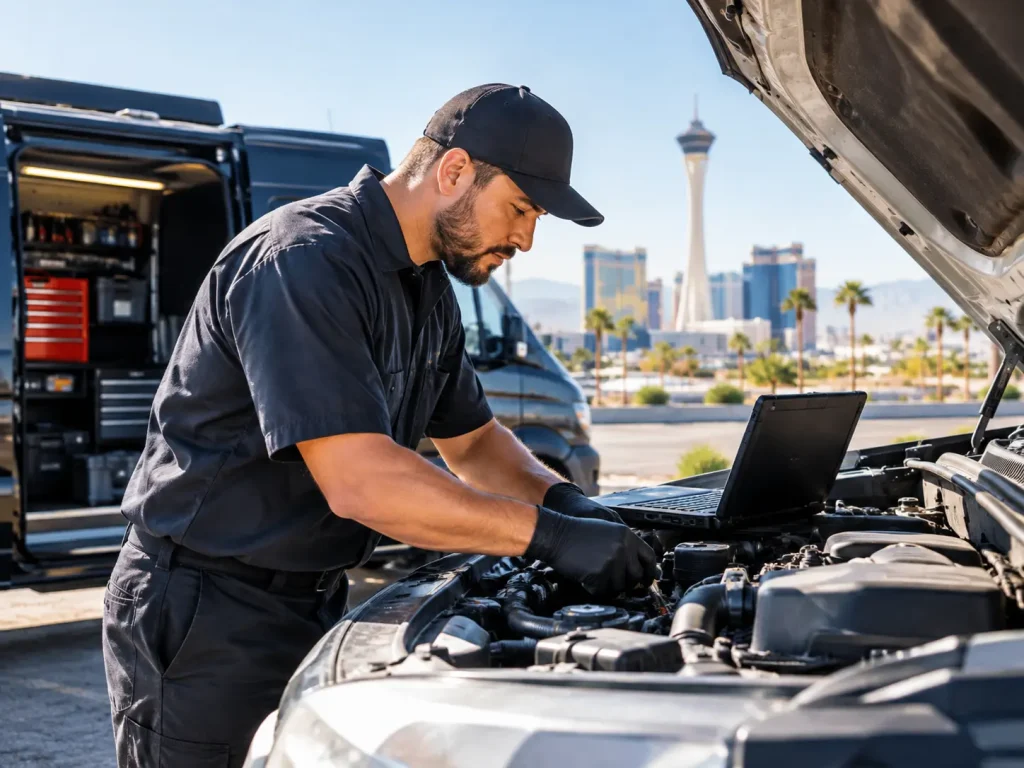
Your brakes work by turning motion into heat. Every time you press the pedal, friction between the pads and the rotors slows the car and generates a lot of heat in the process. Now add an Arizona summer, with outside temperatures that regularly climb past 100 degrees, scorching pavement, and long stretches of stop and go traffic, and your brakes start every drive already running hot. For drivers in Gilbert, that extra heat can speed up wear, reduce stopping performance, and hide small problems until they become expensive. This guide explains how high temperatures affect your brakes, which warning signs to watch for, and how to keep your braking system dependable through the hottest months.
How Brakes Work, and Why Heat Matters
Most cars use disc brakes at the front and either discs or drums at the rear. When you press the pedal, hydraulic fluid pushes the brake pads against spinning rotors, and friction slows the wheels. That friction creates heat, and the brake components are designed to absorb and release it. The system works well within its design limits. The trouble starts when outside heat, heavy traffic, and demanding driving leave less room for the brakes to cool, so they stay hotter for longer and operate closer to their limits.
What High Temperatures Do to Your Brakes
Faster Pad Wear
Brake pads are made of friction material that wears away gradually. Constant heat and frequent stopping in city traffic can accelerate that wear. Pads that last a long time on a quiet highway may wear faster in a commute full of traffic lights and congestion. Thin pads also have less material to absorb heat, which makes the problem worse.
Brake Fade
Brake fade is a temporary loss of stopping power that happens when the brakes get too hot. The pedal may feel softer or need more pressure, and the car may take longer to stop. It is more common with worn parts, aggressive driving, heavy loads, and long downhill stretches, but a system that is already near its limit can fade sooner on a very hot day. Fade is a warning that the brakes are being pushed hard, and a reason to have them inspected.
Brake Fluid Breakdown
Brake fluid is designed to absorb moisture over time, which protects metal parts from corrosion, but absorbed water lowers the temperature at which the fluid boils. If the fluid boils under heavy braking, gas bubbles form in the lines and the pedal can feel spongy or sink toward the floor. This is why manufacturers recommend replacing brake fluid at regular intervals. Check your owner’s manual for the schedule for your car. Heat speeds up the aging of the fluid, so hot climates make that maintenance more important.
Glazed Pads and Rotors
Excessive heat can harden the surface of the brake pads and leave a smooth, glassy layer, known as glazing. Glazed pads grip less effectively and may squeal. The rotors can also develop hot spots or discoloration. In some cases, a technician can address mild glazing, and in others the pads or rotors need to be replaced.
Warped or Uneven Rotors
Rotors that heat and cool unevenly can develop thickness variations or surface wear. Drivers often feel this as a pulsing in the brake pedal or a shaking steering wheel when braking. Sitting with the brakes held hard after a long drive and then cooling unevenly, as well as stuck calipers or worn pads, can contribute. If you feel vibration under braking, have the rotors measured and inspected.
Rubber Parts Under Stress
Brakes contain rubber seals, boots, and flexible hoses that carry fluid to each wheel. Heat can dry them out, harden them, and cause cracking over time. A worn seal can let a caliper stick, and a damaged hose can swell or leak. Our article on why Arizona summers are hard on your car’s rubber components explains how heat affects belts, hoses, seals, and other parts, and brake components are part of that story.
Stuck Calipers and Slides
Calipers must move freely to apply and release the pads. Heat, corrosion, and old lubricant can cause them to stick, which makes one pad wear faster, creates a burning smell, or leaves a wheel hot to the touch after driving. A caliper that does not release properly can also hurt fuel economy and make the car pull to one side.
Warning Signs of Brake Trouble in the Heat
- Squealing, squeaking, or chirping when you brake
- A grinding or scraping sound, which often means the pads are worn through
- A soft, spongy, or sinking brake pedal
- A pedal that feels hard or needs unusual effort
- Vibration or pulsing in the pedal or steering wheel when braking
- The car pulling to one side when you brake
- A burning smell after driving, especially from one wheel
- Longer stopping distances than usual
- A brake warning light on the dashboard
- Brake dust that is heavier on one wheel than the others
- Visible fluid leaks near the wheels
Do not wait on these symptoms. Brakes are a safety system, and delaying repairs can mean larger damage to rotors, calipers, and other parts, and a higher risk on the road.
Gilbert Driving Habits That Add Heat
- Stop and go traffic on busy commuter routes and at long traffic lights
- Short trips that never let the brakes cool and reset
- Heavy loads, roof racks, or trailers that add weight and demand more stopping power
- Following too closely, which means more frequent hard braking
- Riding the brake pedal instead of easing off the gas early
- Running worn tires, which reduce grip and make the brakes work harder
Small habit changes can help. Leave more following distance, look ahead, and slow down gradually by lifting off the accelerator early. Smooth driving means less heat and longer brake life.
How to Protect Your Brakes This Summer
- Have the brakes inspected before summer and at least once a year after that
- Ask for a measurement of pad thickness and rotor condition, not just a visual check
- Replace brake fluid on the schedule in your owner’s manual
- Replace worn pads before they wear down to the metal
- Have calipers and slide pins cleaned and lubricated when the pads are replaced
- Check brake hoses for cracks, bulges, or leaks
- Keep tires properly inflated and in good condition
- Do not overload the vehicle beyond what the manufacturer recommends
- Listen for changes in sound or feel, and act early
What About the Parking Brake?
The parking brake is easy to forget, but heat and age can affect its cable and linkage as well. If it feels loose, will not hold the car, or sticks after use, have it checked. A stuck parking brake can drag and overheat the wheel it controls.
What If the Car Will Not Start After a Hot Day?
Brake trouble is not the only thing summer heat causes. Batteries and electrical parts also suffer, and a car that will not start in a hot parking lot is a common sight in Arizona. Our guide to the top 10 reasons your car won’t start and how to get back on the road goes through the usual causes, so you can tell whether you are dealing with a brake issue, a battery issue, or something else.
Can a Mobile Mechanic Handle Brake Service?
In many cases, yes. A mobile mechanic can come to your home or workplace in the Gilbert area, inspect the pads, rotors, calipers, lines, and fluid, and complete many common brake repairs on site, including pad replacement and brake fluid service. That saves you a trip to the shop in the heat, and you can see exactly what the technician finds. Some jobs, such as certain machining work or major hydraulic repairs, may need the equipment of a full shop, and a trustworthy technician will tell you honestly when that is the case. When you book, describe the symptoms, such as noises, pedal feel, or vibration, and mention when they happen.
Do Not Let the Heat Catch You Off Guard
Arizona heat is hard on every part of your car, but brakes are the one system where a small problem can have serious consequences. Pay attention to the sounds and feel of your pedal, keep up with inspections, and replace worn parts and old fluid on time. Doing so costs far less than the repairs that follow when brakes are ignored.
To learn more about our services, visit our homepage. If your brakes are squealing, soft, or due for an inspection, reach out through our contact us page and we will come to you anywhere in the Gilbert area.