
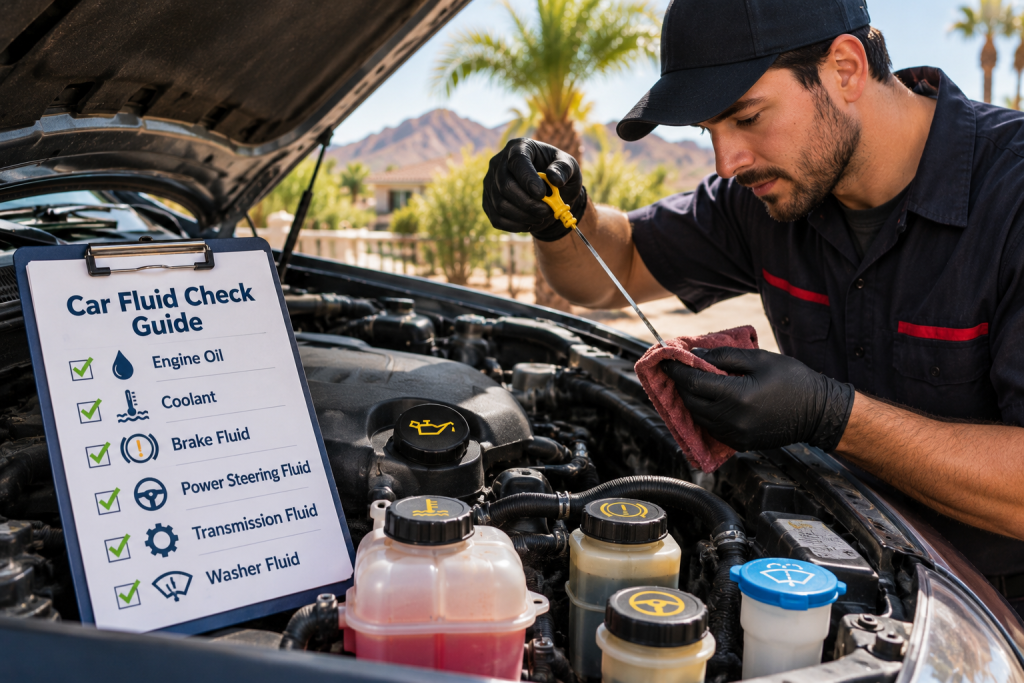
Your car runs on more than gasoline. Behind the scenes, a handful of fluids lubricate moving parts, carry heat away from the engine, help you steer and stop, and keep the windshield clear. When one of them runs low or breaks down, the car often gives only subtle hints before something goes wrong. In the Arizona heat, that matters even more. This guide explains which fluids to check, what each one does, what to look for and how often to look. If you are searching for a car fluid check in Gilbert, AZ, think of this as a simple routine that any driver can learn, with a clear line between what you can do in the driveway and what is better left to a technician.
Why Fluids Matter So Much in Gilbert
Heat is hard on every fluid in your car. High temperatures can thin oil, speed up the breakdown of additives, push coolant systems harder and cause fluids to evaporate or leak past aging seals. Fluids also tend to wear out quietly. A level that looked fine last month can be noticeably lower today if there is a slow leak. That is why a regular look under the hood is one of the easiest ways to catch trouble early.
Before you begin, a few ground rules apply to every fluid on this list:
- Use your owner’s manual. It shows where each reservoir is, which type of fluid your car needs and how often the manufacturer recommends checking or changing it.
- Park on level ground. A tilted car can give a false reading.
- Check when the engine is cool, unless the manual says otherwise for a specific fluid.
- Never open a hot radiator or coolant cap. Hot coolant is under pressure and can cause serious burns.
- Use only the fluid your manual specifies. The wrong type can damage parts, even if it looks similar.
- Wipe up spills and keep fluids away from children and pets.
Engine Oil
Engine oil lubricates the moving parts inside the engine, reduces friction and helps carry heat and dirt away. It is the fluid most drivers know best, and it is also the one that can do the most harm when ignored.
- How to check. With the engine off and cool, pull the dipstick, wipe it clean, reinsert it fully, then pull it out again and read the level between the marks.
- What to look for. Oil that is very dark, gritty or milky is a reason to get the car looked at. A level near or below the low mark means the engine needs attention.
- Topping off. If the level is low, add the oil type listed in your manual a little at a time and recheck. Do not overfill.
- Warning light. If the oil pressure light comes on while driving, pull over safely and turn off the engine. Driving on may cause severe damage.
Some cars do not have a traditional dipstick and use an electronic oil level display instead. Your manual explains how to read it.
Coolant
Coolant, sometimes called antifreeze, circulates through the engine and radiator to keep temperatures under control. In a place where the summer sun bears down for months, the cooling system works hard, and low coolant is a common cause of overheating.
- How to check. Look at the translucent overflow reservoir with the engine cool. It usually has marks for the minimum and maximum levels.
- What to look for. Rust colored, oily or sludgy coolant, a sweet smell near the engine or puddles under the car can signal a problem.
- Topping off. Add only the coolant type your manual calls for, and only through the reservoir when the engine is cool.
- Repeated drops. If the level keeps falling, there may be a leak, and it should be inspected rather than topped off again and again.
Coolant hoses are made of rubber, and they can crack, soften or swell over time. Our post on why Arizona summers are hard on your car’s rubber components explains what to watch for in hoses, belts and seals.
Brake Fluid
Brake fluid transfers the force from your foot on the pedal to the brakes at each wheel. Because it is part of a safety system, treat it with extra care.
- How to check. Find the brake fluid reservoir, often a small translucent container near the back of the engine bay on the driver’s side, and look at the level against the marks. Do not open it more than necessary, since brake fluid absorbs moisture from the air.
- What to look for. Fluid that looks dark or dirty, or a level that has dropped noticeably, deserves a professional look.
- Do not simply top it off and move on. The fluid level in the reservoir often drops as brake pads wear, but a sudden drop can also point to a leak.
- Warning signs. A soft or sinking pedal, a pedal that goes closer to the floor than usual or a brake warning light means you should not keep driving normally. Have the car inspected right away.
Brakes and heat are closely connected. Read how Arizona heat affects your brakes for more on why this system deserves attention in our climate. Brake service is a safety matter, so many brake repairs are best handled by a qualified technician, and some may need a shop.
Power Steering Fluid
Some vehicles use hydraulic power steering, which relies on fluid to make the wheel easier to turn. Many newer cars use electric power steering and have no fluid at all, so your manual will tell you which one you have.
- How to check. If your car has a reservoir, look at the level and compare it with the marks, following the manual’s instructions for temperature.
- What to look for. Whining or groaning when you turn the wheel, stiff steering or foamy, dark fluid are signs to have the system checked.
- Topping off. Use only the fluid the manual specifies. If the level keeps dropping, there may be a leak.
Transmission Fluid
Transmission fluid lubricates and cools the gearbox and helps it shift smoothly. How you check it varies a great deal from car to car.
- Some cars have a dipstick, and the manual may require the engine to be running or warm for an accurate reading.
- Many modern cars have a sealed transmission with no dipstick, and checking the fluid is a job for a technician.
- Warning signs include slipping gears, delayed or harsh shifting, burning smells or reddish fluid under the car.
Because the process differs so much, follow your manual closely, and if the transmission is acting strangely, have it inspected rather than guessing.
Windshield Washer Fluid
Washer fluid is the simplest one to deal with, and it matters for visibility. Dust, bugs and sun glare can make a dirty windshield hard to see through.
- How to check. Look for the reservoir with the windshield symbol, usually with a cap you can open by hand.
- Topping off. Fill it with washer fluid made for cars, not plain water for regular use, and not household cleaners.
- If nothing sprays even with a full reservoir, the nozzles or the pump may need attention.
Other Fluids to Know About
Depending on your vehicle, there may be a few more fluids to consider. Many all wheel drive and four wheel drive vehicles have differential and transfer case fluids. Some cars have a separate fluid for the air conditioning system. Hybrid and electric vehicles have their own cooling needs. These usually follow service schedules in the owner’s manual and are often best handled by a technician.
How Often Should You Check?
There is no single schedule that fits every car, so the manual is your best guide for service timing. As a general habit, though, many drivers find it useful to:
- Take a quick look at the oil, coolant, brake fluid and washer fluid every so often, especially before a long drive.
- Check more carefully before summer, when heat puts the most strain on the car.
- Look under the car where you park from time to time, because new spots on the ground are an early clue.
- Check any time a warning light comes on, a noise appears or the car feels different.
Reading the Signs: Leaks and Colors
Fluid color can help you work out where a leak is coming from, though it is only a clue and not a diagnosis. Dark brown or black spots often point to engine oil. Bright green, orange or pink fluids can be coolant. Reddish fluid might be from the transmission or power steering. Clear, slippery fluid near a wheel could be brake fluid, which is a good reason to have the car checked before you drive it. If you see a puddle you cannot identify, take a photo, note where it is and ask a technician.
When to Call a Professional
Checking levels is simple, but fixing the cause of low fluid is not always a driveway job. Call a technician if:
- A fluid level keeps dropping after you top it off.
- Any fluid looks milky, gritty, burnt or contaminated.
- A warning light for oil pressure, brakes, temperature or the battery appears.
- The car overheats, smells of burning or leaks noticeably.
- Steering, braking or shifting feels different than usual.
How a Mobile Mechanic Can Help
You do not need to give up half a day to get your fluids looked at. A mobile mechanic can come to your home or workplace in Gilbert, check your fluid levels and condition, look for leaks and perform common services on site, such as an oil change or a coolant top off. A technician can also tell you which fluids are due for service based on your manual. Some jobs, including major leaks, certain brake repairs or transmission work, may need a shop with a lift and specialized equipment, and an honest technician will tell you when that is the case.
Quick Fluid Check Summary
- Engine oil: check the dipstick or display on level ground.
- Coolant: check the reservoir only when the engine is cool.
- Brake fluid: check the level and have any drop inspected.
- Power steering fluid: check only if your car has it.
- Transmission fluid: follow the manual, since many cars are sealed.
- Washer fluid: top off with proper washer fluid.
A few minutes with the hood open can save you from a breakdown on a hot day. If you would like a professional to take a look, visit the Mobile Mechanic Pros of Gilbert homepage to learn more, or contact us to schedule a visit.